
How a Home Lift Helps You Stay Independent at Home
Independence at home comes down to how easily you can move, use your space, and go about daily life without friction. That matters in more situations than people expect – from busy family homes to periods of recovery, as well as longer-term living. When a home supports how you live, everything else becomes easier.
What Independence Actually Looks Like at Home
- Being able to move freely between floors without hesitation.
- Using every part of the house, rather than avoiding certain rooms.
- Carrying out daily routines without needing help or workarounds.
It also means consistency. Getting up, moving through the home, and going about your day without having to think twice about how you’ll manage something. No adjustments, no planning around limitations.
When that ease is there, it tends to go unnoticed. But when it isn’t, it quickly affects how the home is used. Spaces become less accessible, routines start to change, and reliance on others can increase.
A home that supports independence simply allows life to carry on as normal.

Where Homes Start to Work Against You
When things start to change, it’s usually stairs that become the main sticking point. Moving between floors can feel less straightforward, whether that’s due to a temporary issue or something more permanent.
What follows is often a series of small adjustments: using certain rooms less, keeping essentials on one floor, and, in some cases, setting up a temporary sleeping space downstairs. Carrying items between floors becomes more difficult too, so routines start to shift.
These changes tend to happen gradually and, over time, can limit how much of the home is actually being used. The house itself hasn’t changed, but how you live in it has.

How a Home Lift Changes That
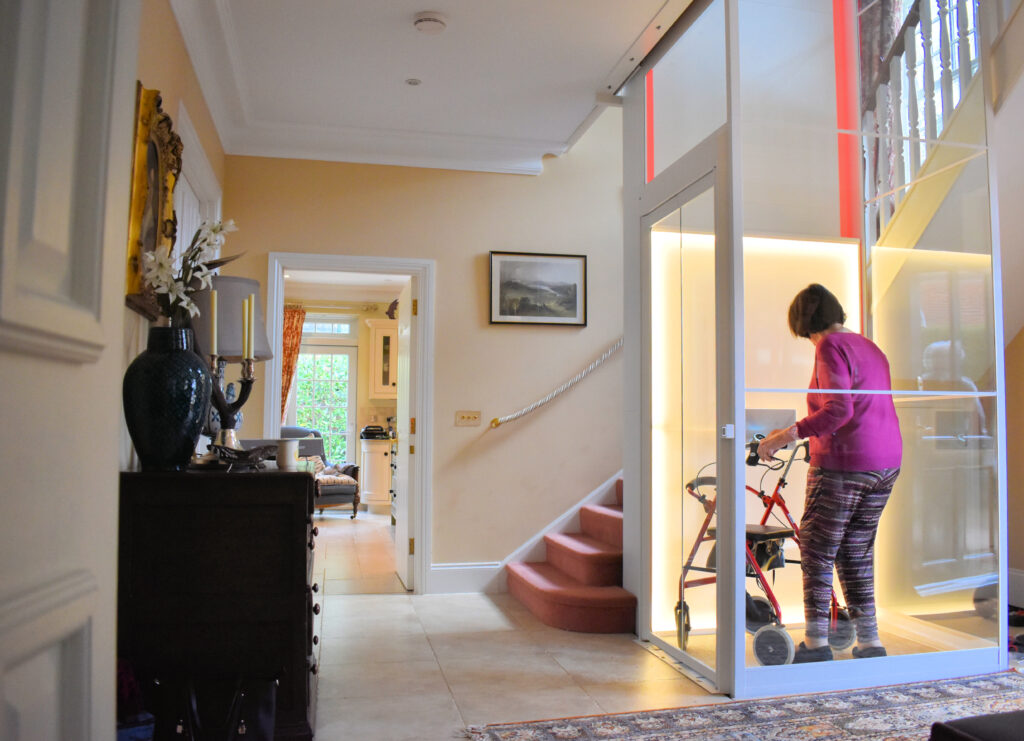
A home lift changes how you use your space in a very straightforward way. It removes the need to rely on stairs, making every floor equally accessible again.
Instead of adjusting your routine or avoiding certain areas, the whole home remains open to you. Bedrooms, bathrooms, living spaces – all usable, without having to think about how you’ll get there or whether it’s worth the effort. Movement becomes simple again.
That shift also reduces the need for support. Tasks that might have required help, or been put off altogether, can be handled independently. Carrying items between floors, moving freely throughout the day, and maintaining your usual routines all become more manageable.
In practice, it’s not something that takes over the home. It sits in the background, used when needed, without changing how the space feels or functions.
Independence at Different Life Stages
Families and Changing Homes
Homes rarely stay static, especially with a growing family. As children get older, spaces are used differently and daily routines become more varied. Bedrooms shift, living areas take on multiple roles, and movement between floors becomes more frequent.
Thinking ahead allows the home to keep pace with family life, rather than needing to be reworked later.


Injury, Recovery, or Short-Term Change
Not all changes are permanent. Injury, surgery, or even short-term mobility issues can disrupt how a home is used. Stairs can quickly become a barrier, even if only for a few weeks or months. In these situations, independence often comes down to maintaining normal routines without having to rearrange the home or rely heavily on others.
Having an alternative way to move between floors can reduce disruption and make recovery periods far more manageable.
Later Life Without Compromise
For many, independence later in life is closely tied to staying in a familiar home. The alternative is often downsizing or moving to a single-storey property, which isn’t always desirable. Maintaining access to all levels of the home allows routines to stay intact, without limiting how the space is used. It also avoids the need to give up rooms or adapt living arrangements.
A well-planned home lift can keep the home working in the same way, for as long as possible.

The Wider Impact
When movement is straightforward, there’s more confidence in how you go about everyday tasks. You’re less likely to second-guess whether something is worth the effort, or avoid parts of the home altogether. There’s also a level of privacy that comes with being able to manage things yourself, without needing to ask for help. It removes a layer of friction that would otherwise shape how you use your home.

Planning vs Retrofitting
Planning for a home lift is usually more straightforward when it’s considered early. Space can be allowed for, layouts can be adjusted, and integration feels more natural within the overall design.
That said, installation is still possible later. The difference is often in how the lift fits within the existing structure, and the level of change needed to make it work.
In many cases, the most effective approach is simply to keep the option open. Understanding what’s possible, where a lift could go, and what might be required gives you flexibility – whether you choose to act now or further down the line.
Is a Home Lift the Right Step for You or Your Family?
Whether a home lift is the right step depends on how your home is set up and how you use it day to day. In multi-level properties, it can offer a more consistent way to move between spaces. It also comes down to how you see your home working in the future, and whether keeping all areas accessible matters to you.
A home lift keeps your options open.

Staying in Control of Your Life and Home
Staying independent at home often comes down to one simple thing: control. Being able to move freely, use every part of your space, and maintain your routine without compromise. When a home supports that, there’s no need to adjust how you live around it. It continues to feel like your own, long-term.
Have a Question About Independence at Home?
Do you need a home lift if you can still use stairs?
Not necessarily. Many homeowners consider a lift before it becomes essential. It can make day-to-day movement easier and help avoid future disruption.
Can a home lift help after surgery or injury?
Yes. Short-term changes like injury or recovery can make stairs difficult, even temporarily. A home lift can help maintain normal routines during this period, without needing to rearrange how the home is used.
Will a lift change how my home looks?
Modern home lifts are designed to fit within the style of the home rather than stand out. Placement, size, and finishes can all be considered as part of the design, especially if planned early. In many cases, they become a subtle, integrated feature rather than a dominant one.
Can you install a lift in an existing home?
Yes, many lifts can be installed in existing properties. The approach will depend on the layout, available space, and structure of the home. Planning from the outset can make integration simpler, but retrofitting is often still a viable option.
Does a home lift replace the need to move house?
For some homeowners, it can. Particularly in multi-storey homes, or properties with steps at the entrance.
Instead of adapting to a new property, the right vertical solution can allow you to continue using your current home more easily. It depends on the layout and your long-term plans, but it can certainly be a viable alternative to moving.